Maintenance With a Clear Owner.
Installed Inside Your Property Management Operation.
We take full ownership of maintenance coordination inside your PMS so tenants always get a response and your team stops firefighting.
How installed maintenance ownership works inside a real PM operation
The Hidden Risk Most PMs Already Carry
Maintenance rarely breaks because of bad vendors or poor intent.
It breaks because responsibility is spread across too many people, systems, and time windows.
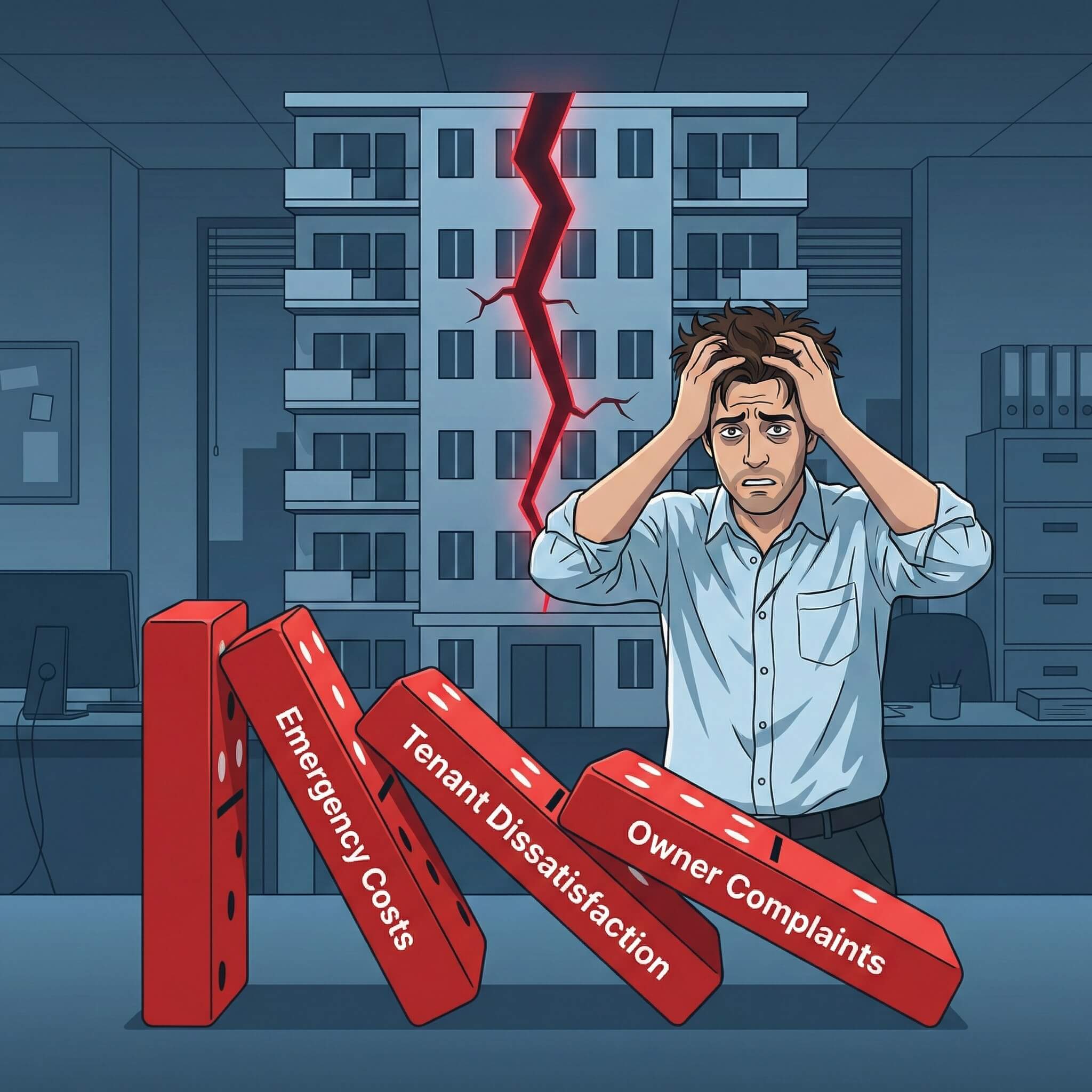
When no one owns the entire lifecycle of a maintenance request, from intake to completion, small gaps compound:
✅After-hours requests sit too long
✅Follow-ups slip between shifts
✅Vendors wait on direction
✅Internal teams get pulled into the middle
✅Tenants escalate because they feel ignored
Over time, this quietly increases:
❌ Emergency repair costs
❌ Tenant complaints and churn risk
❌ Owner escalations and reputational exposure
The question isn’t whether maintenance should be outsourced.
It’s whether it should continue operating without a single accountable owner.
The Installed Solution
We install a dedicated maintenance ownership layer inside your operation, not alongside it.
This is not a call center.
This is not a ticket-taking service.
We assume day-to-day ownership of maintenance coordination within your:
✅Property Management Software
✅Vendor list
✅Approval rules and NTE limits
✅Escalation protocols
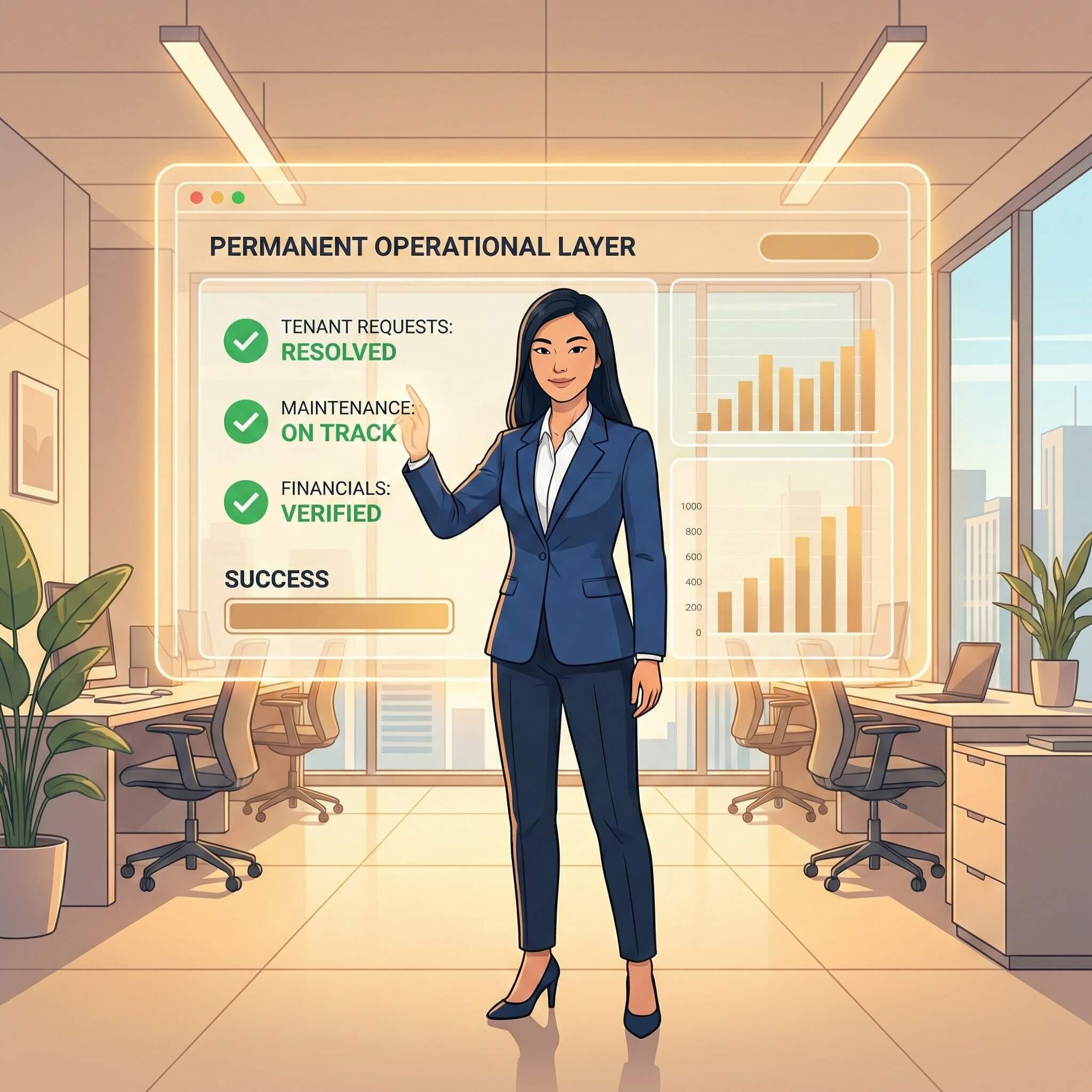
What changes immediately:
Tenants always receive a response, no voicemail gaps.
Routine requests are validated and dispatched correctly.
True emergencies are escalated immediately.
Your internal team is removed from the middle.
Maintenance stops being reactive noise and starts operating like a controlled system.
HOW IT WORKS
(24/7 Coverage)
Hybrid Human-AI Triage
We combine instant AI intake with human judgment to ensure speed, accuracy, and escalation discipline, around the clock.
Immediate Intake

All requests (call, SMS, or email) are captured instantly.
Smart Triage

The system categorizes requests and filters "noise" (non-emergencies) from true hazards.
Human Escalation

True emergencies trigger an immediate wake-up call to the human coordinator.
Prioritized Processing
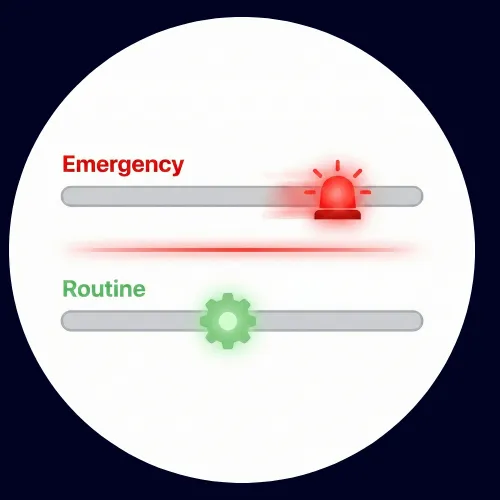
Non-urgent requests are logged and validated. We handle routine tickets efficiently, often immediately, but strictly prioritize emergencies to ensure critical lines remain open for true hazards.
Standard Maintenance Workflow

Step 1: Intake & Validation
Requests are reviewed for completeness and legitimacy. Required documentation (such as photos) is enforced.
Step 2: Warranty & Vendor Routing
Warranty issues are routed appropriately. Repair work is dispatched to your preferred vendors.
Step 3: Approval Control
Work exceeding "Not-To-Exceed" limits is summarized and routed to you for approval.

Step 4: Dispatch & Active Coordination
Work orders are issued. Vendors are actively managed until completion is confirmed.

Step 5: Completion & Accounting
Completion is verified. Invoices are uploaded directly into your PMS for GL processing.
Service Guardrails
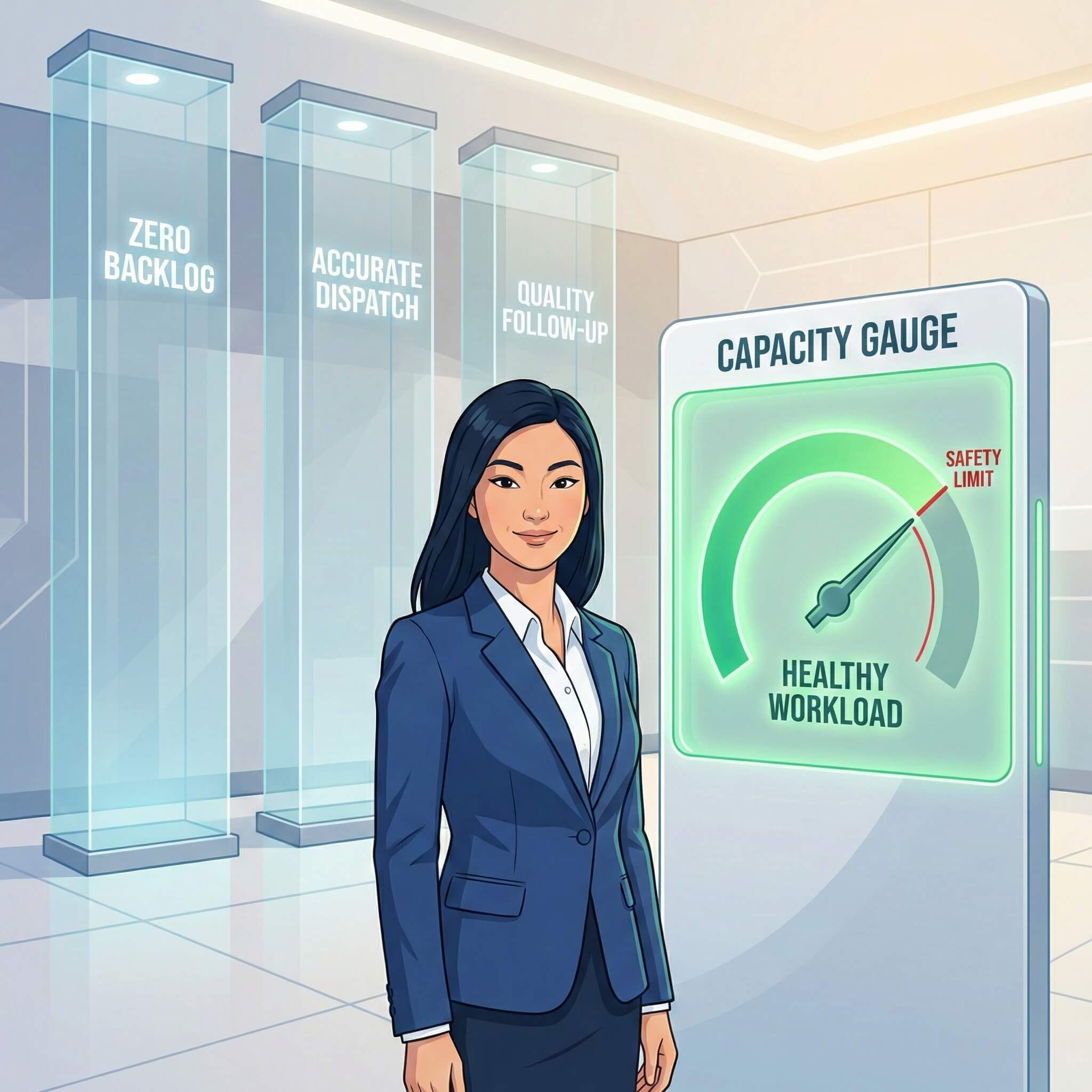
Each client engagement is intentionally capacity-capped.
This ensures:
✅No ticket backlogs
✅No rushed vendor dispatch
✅No delayed tenant follow-ups
As a portfolio approaches capacity thresholds, scope is adjusted before service quality is affected.
Growth is supported.
Execution is never compromised.
Partnership Options
Maintenance workload does not scale linearly. Smaller portfolios often require more hands-on coordination, while larger portfolios demand stricter escalation control.
Pricing is based on responsibility and execution volume, not just unit count.
Core Capacity (Recommended)
Virtual Maintenance Department (Up to 100 units)
$1,299/m
Full maintenance ownership & coordination
24/7 coverage via Hybrid Triage (AI + Human Escalation)
Vendor dispatch and follow-through
Strict NTE-based approval controls
Direct operation inside your PMS
$0 Onboarding Fee
Expanded capacity : 101–200 units: $1,999 / month 200+ units: Custom (volume-based)
No contracts - cancel anytime
Operations Support Retainer
Lite / Non-Core Support (10 Hours, Monthly Reset)
$450/m
Financial Admin: Invoice processing, accounts payable, payment scheduling, and reconciliation.
Tenant Relations: Rent reminders, late payment follow-ups, and handling lease inquiries.
General Admin: Email management, document organization, and lease agreement filing.
Note : Does NOT include maintenance ownership, 24/7 intake, or dispatch authority.
BUILT FROM INSIDE THE ROLE
Hey, I'm Nash!

Hey, I’m Nash.
I’ve spent over six years working inside U.S. property management operations, specifically around maintenance coordination.
What I consistently saw wasn’t bad teams or poor effort, it was exposure created by unclear ownership.
Maintenance escalated not because issues were complex, but because no one clearly owned follow-up across shifts, systems, and vendors.
This service was built from inside that role, to install clarity, accountability, and consistency where maintenance operations actually break down.
Next Steps...
If installing a dedicated maintenance ownership layer would reduce operational exposure inside your portfolio, we can typically go live within 72 hours.
No long-term lock-in.
Start with the coverage level that fits your current portfolio and adjust as you grow.
STILL NOT SURE?
Frequently Asked Questions
Will tenants know this is not an in-house team?
No. From the tenant’s perspective, maintenance simply becomes more responsive and consistent.
We operate inside your existing Property Management Software, follow your communication standards, and coordinate with your vendors. There is no call center language, third-party branding, or generic scripting.
Tenants experience faster responses and clearer follow-up, not a different company.
How do you prevent unnecessary vendor dispatches or inflated repair costs?
Nothing is dispatched blindly.
Every request is reviewed for legitimacy and completeness before action is taken. Documentation such as photos is required where appropriate. Warranty responsibility is checked before vendor routing.
If a repair exceeds your Not-To-Exceed limits, the issue is summarized and routed to you for approval before any work is authorized.
You retain financial control. We own execution.
What happens if multiple after-hours issues come in at the same time?
True emergencies are always prioritized.
Our intake and triage process ensures emergency lines remain available for actual hazards, while non-urgent requests are logged and handled without creating bottlenecks.
Capacity limits exist specifically to prevent overload during high-volume or after-hours spikes.
How do you define a maintenance emergency?
Emergency criteria are defined during onboarding and aligned with your current standards.
Typical examples include active water leaks, gas or electrical hazards, fire-related issues, and loss of essential services when applicable.
This prevents routine issues from being treated as emergencies while ensuring real risks receive immediate attention.
Will this disrupt my existing vendors or workflows?
No.
We work within your existing vendor network, approval rules, and workflows. The goal is not to change how you operate, but to remove the coordination burden that slows everything down.
Most vendors prefer having a single, consistent point of contact who follows through.
How do you handle difficult tenants or escalations?
Routine tenant communication and follow-up are handled professionally and consistently.
If an issue requires management-level involvement or falls outside defined scope, it is escalated cleanly with full context and documentation. This replaces surprise emails and emotional calls with clear, actionable summaries.
You stay informed without being pulled into daily noise.
Can you work directly inside my Property Management Software?
Yes.
We operate directly inside your PMS and follow your internal processes for ticket logging, work orders, notes, documentation, and invoice uploads.
There are no parallel systems and no shadow tracking.
What happens if my portfolio grows or maintenance volume increases?
Service is intentionally capacity-capped.
As volume approaches thresholds, scope and capacity are adjusted before service quality is affected. Growth is supported deliberately, not reactively.
Execution quality is protected at all times.
How quickly can we get started?
Most residential portfolios can go live within 72 hours.
Onboarding is focused and lightweight, covering access, rules, vendors, approval limits, and escalation criteria. There are no long-term contracts or onboarding fees.
Is this a good fit for smaller residential portfolios?
Often, yes.
Smaller portfolios frequently require more hands-on coordination because there is less internal staff bandwidth. The service is best suited for residential portfolios where maintenance volume creates daily operational drag, regardless of unit count.
What if this is not a fit after we start?
There are no contracts.
If the service is not providing clear operational relief, you can cancel at any time.
Still have questions?
I will review your current residential maintenance setup and tell you plainly whether this is a fit for your operation.
Copyrights 2026 | VA Property Manager | Terms & Conditions